


Centers & Services
Top > Centers & Services > Clinical Services > Psychosomatic Medicine
Psychosomatic Medicine
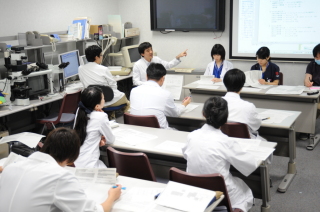
The Department of Psychosomatic Medicine provides comprehensive,
patient-centered care for physical illnesses in which psychological
or social factors significantly influence the onset or progression of
symptoms—commonly known as psychosomatic disorders. These
include, but are not limited to, headache, diabetes mellitus, irritable
bowel syndrome, obesity, and eating disorders. The department is
dedicated to delivering integrative treatment that addresses the
physical, psychological, and social dimensions of each patient ’s
condition.
Medical services
Services include outpatient and inpatient care, as well as interdepartmental consultations. The department also actively engages in liaison activities in cooperation with other depar tments such as Hematology and Oncology, Palliative Care, Diabetes and Metabolic Medicine, and Stomach and Esophageal Surgery. For individuals with eating disorders, specialized outpatient services and inpatient treatment are provided to ensure continuity of care tailored to the severity and specific needs of each case.
Diagnosis and treatment policy
The department adopts a holistic approach based on the biopsychosocial model with the aim of treating the whole person rather than focusing solely on physical symptoms. Treatment plans are developed in collaboration with relevant specialties and may include both pharmacotherapy and psychotherapy (e.g., cognitive-behavioral therapy), depending on the patient’s clinical condition.
Specialties
Eating disorders
Integrated care for eating disorders is offered through a
combination of physical management and evidence-based psychotherapy, such
as cognitive-behavioral therapy. In cases requiring more intensive care, inpatient
treatment is available. (Referral to psychiatric services may be recommended if
deemed clinically appropriate.)
Psycho-Oncology
The department offers psychological support to patients with cancer and their families, helping them cope with the emotional and psychosocial challenges that can accompany cancer diagnosis and treatment.
Psychomatic Disorders
The department provides diagnosis and treatment for conditions such as migraine, tension-type headache, irritable bowel syndrome, obesity, and diabetes, in which psychological or social stressors play a substantial role in onset or exacerbation. Care combines conventional medical treatment with psychological evaluation and psychosocial interventions.
Target diseases
In addition to eating disorders, the depar tment treats a broad range of psychosomatic disorders—physical illnesses influenced by psychological or social factors—including asthma, essential hypertension, ischemic heart disease, irritable bowel syndrome, diabetes, obesity, migraine, tension-type headache.
Frequently performed tests and descriptions
During the first visit, a thorough assessment is conducted, including a detailed
interview covering the patient’s medical history and relevant psychological and
social background. Psychological assessments using standardized questionnaires
may be used as part of the evaluation. If necessary, physical examinations and
diagnostic tests such as blood tests, urinalysis, X-rays, electrocardiograms
(ECG), and electroencephalograms (EEG) are performed to achieve an accurate
understanding of the patient’s condition.

Kazuhiro Yoshiuchi
Departments/Divisions
Department of Psychosomatic Medicine
Titles
M.D. , Ph.D.
Expertise/Specialties
Psychosomatic Medicine
Research Interests
Research on development of treatment for eating disorders and on development of mobile tools for assessment and treatment for life-style related disorders and mood disorders using EMA and EMI methods.
Languages
Japanese / English
Major diseases treated in this department and numbers of in- and outpatients (including duplicated diagnoses)
| Disease name | Number of inpatients | Number of new outpatients |
|---|
| 1 | Eating disorders | 53 | 59 |
| 2 | Psychosomatic disorders | 0 | 10 |
| 3 | Mood disorders | 6 | 27 |
| 4 | Anxiety disorders | 0 | 24 |
| 5 | Others | 1 | 75 |
(2015)
Areas of expertise, treatment and examination methods
Diseases
- Psychosomatic disorders (such as irritable bowel syndrome, functional headaches, hypertension, and diabetes)
- Eating disorders
Treatment methods
- Pharmacotherapy (medications, such as antidepressants and anti-anxiety drugs)
- Relaxation method
- Cognitive behavioral therapy
- Others (including transactional analysis therapy and sand play therapies)
Note: Methods 2, 3, and 4 may not be applicable in some cases, depending on the number of patients and time of consultation. For further details, please consult the initial doctor or that in charge during consultation.
Examination methods
- Psychological examination (Personality test, Intelligence test etc.)
- Blood test
- Others (including head CT scans, electroencephalography, and Holter electrocardiography)
