


Centers & Services
Top > Centers & Services > Clinical Services > Neurosurgery
Neurosurgery
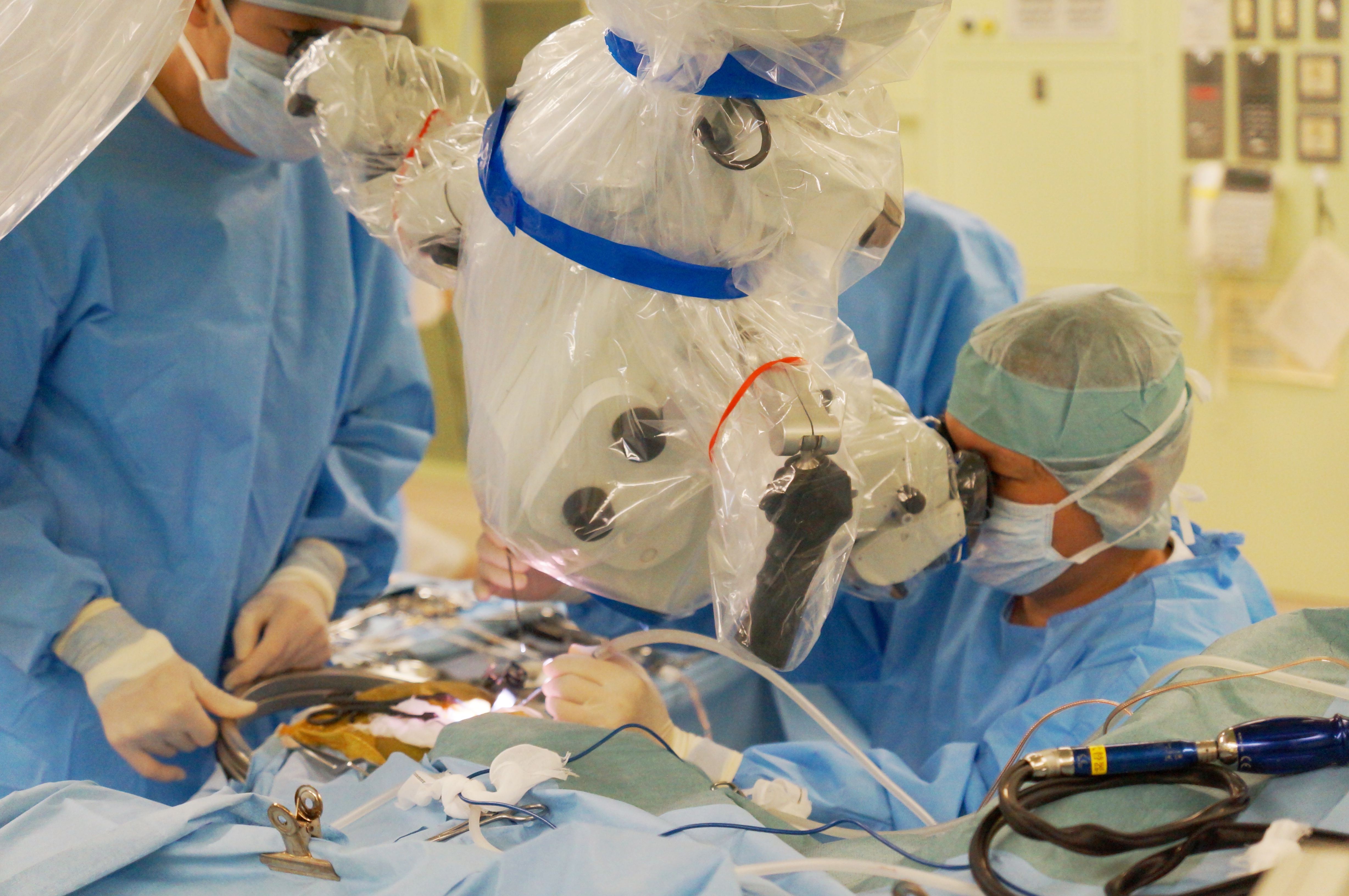
The Department of Neurosurgery specializes in surgical treatment for tumors of the brain and spinal cord, cerebro-vascular disorders (aneurysm, vascular malformation, etc.), and functional brain disorders (epilepsy, pain, etc.).
Medical services
Consultations for new patients are provided daily. Specialized outpatient services are provided on Mondays, Wednesdays and Fridays. Surgery is performed on Tuesdays, Wednesdays and Thursdays. Inpatient care is provided by four teams composed of 16 staff physicians and 8 residents.Our department includes 31 boardcertified neurosurgeons (The Japan Neurosurgical Society), 17 board-certified stroke specialists (The Japan Stroke Society), 4 technical instructors and 5 certified surgeons (Japanese Society for Surgery for Cerebral stroke), 1 training supervisor and 12 board-certified specialists in neuroendovascular therapy (The Japanese Society for Neuroendovascular Therapy), 6 certified neuroendoscopic surgeons (Japanese Society for Neuroendoscopy), 3 board-certified cancer treatment physicians (Japanese Board of Cancer Therapy), 1 teaching physician and 2 board-certified specialists in epilepsy (Japan Epilepsy Society), and 1 board-certified endocrinologist (The Japan Endocrine Society).
Diagnosis and treatment policy
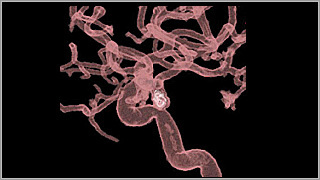
With state-of-the-art devices for diagnosis and treatment and abundant human resources that are available from the university, optimal treatment can be provided for individual patients. Surgery is carefully simulated and perioperative monitoring and navigation are used for treatment.
Specialties
- Surgical and postsurgical treatment for various brain tumors (particularly malignant brain tumor, skull base tumor, meningioma, acoustic tumor, pediatric brain tumor)
- Brain tunor surgery(Intraventricular surgery and Nasal skull base surgery) using a neuroendoscope
- Surgery for cerebrovascular disorders (cerebral aneurysm, giant/thrombosed cerebral aneurysm, cerebral arteriovenous malformation, cavernous malformation, moyamoya disease, carotid stenosis)
- Neuroendovascular surgery (cerebral aneurysm, carotid stenosis, dural arteriovenous fistula, cerebral arteriovenous malformation)
- Surgical treatment for epilepsy
- Surgery for trigeminal neuralgia and hemifacial spasm
- Spinal cord/spine surgery (Chiari malformation, spinal cord tumor, spinal vascluar malformation)
- Gamma knife radiosurgery for benign and metastatic brain tumor, cerebral arteriovenous malformation
- Spina bifida
Target diseases
Brain tumors such as meningioma, glioma, metastatic brain tumor, schwannoma, acoustic tumor, and pituitary adenoma; vascular disorders such as cerebral aneurysm and cerebral arteriovenous malformation; functional disorders such as hemifacial spasm, trigeminal neuralgia, and refractory epilepsy; spinal diseases such as spinal tumor and dural arteriovenous malformation; pediatnic cases; skull base cases such as chordoma, chondrosarcoma; other disorders such as hydrocephalus and congenital abnormality.
Advanced treatments / Specialized tests
- Gamma knife
- Vagus nerve stimulation therapy for epilepsy
- Precision medicine based on oncogene panel test
- Stereoelectroencephalography; SEEG
Frequently performed tests
- CT, MRI: brain imaging examination
- Functional MRI, magnetoencephalography (MEG): brain function test
- Electroencephalography (EEG): epileptic focus examination
- SPECT, PET: cerebral blood flow and cerebral metabolism test
- Cerebrol angiography: detailed cerebrovascular examination
Nobuhito Saito
Departments/Divisions
Neurosurgery
Titles
M.D. , Ph.D.
Expertise/Specialties
Neurosurgery
Research Interests
Surgery of cerebrovascular diseases, Surgery of benign brain tumors, Experimental cerebral ischemia
Languages
Japanese/English
Major operations and treatments performed in this department and their numbers
| Name of operation/treatment | Number |
|---|
| Neurological surgery | 429 |
| Brain stereotactic radiosurgery (adopting the gamma-knife method) | 116 |
| Type of neurological surgery | Number |
|---|
| 1 | Surgery for brain tumors including skull base, pituitary, and malignant intracranial tumors | 149 |
| 2 | Surgery for cerebrovascular diseases (such as aneurysmal clipping and bypass grafting) | 45 |
| 3 | Surgery for head injury (such as hematoma evacuation) | 35 |
| 4 | Surgery for hydrocephalus (including endoscopic procedures) | 39 |
| 5 | Spinal cord and column surgery (such as tumor resection, arteriovenous fistula disconnection, cervical/lumber decompression) | 11 |
| 6 | Functional surgery (such as epilepsy surgery, vagus nerve stimulation, nerve decompression, deep brain stimulation) |
54 |
| 7 | Endovascular surgery (such as coil embolization for cerebral aneurysms and carotid artery stent placement) | 60 |
| 8 | Others | 36 |
(2015)
